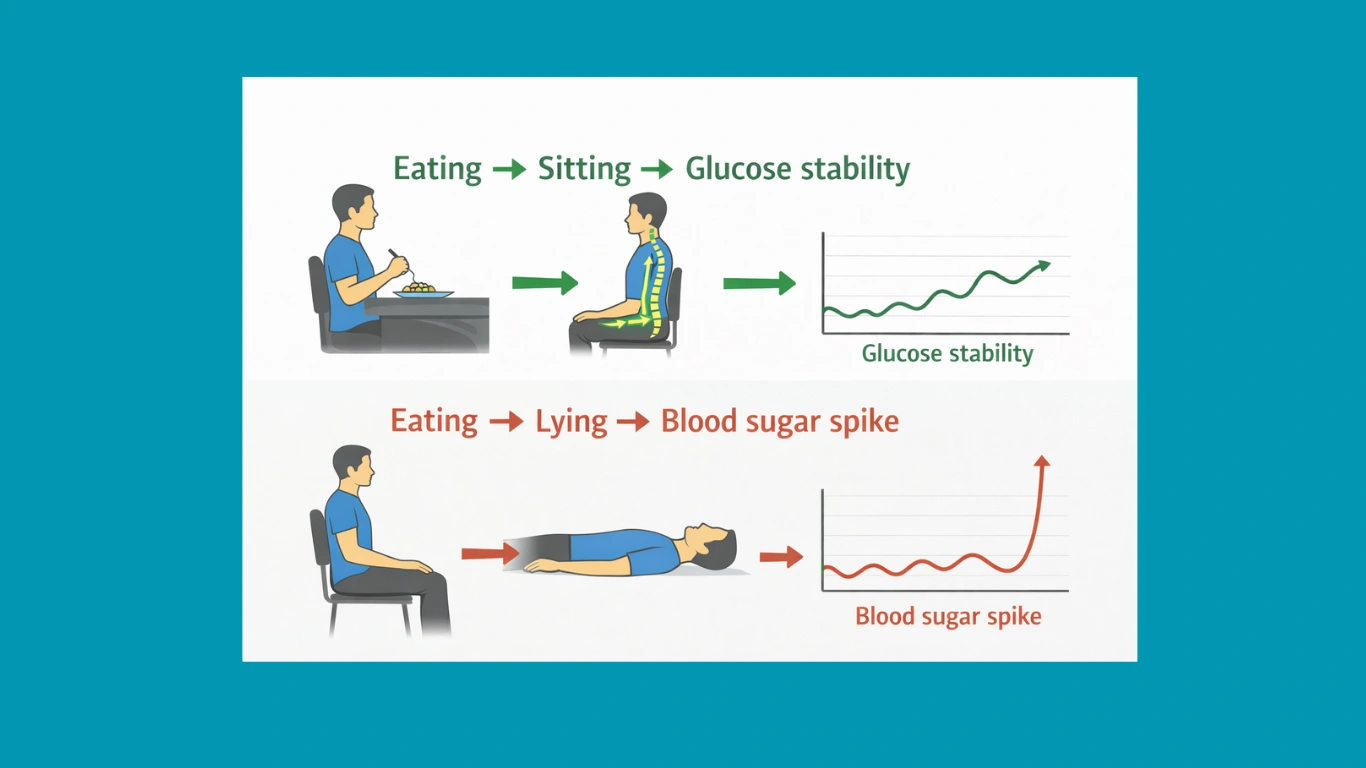
For a very long time, I believed that blood sugar control depended only on food choices, walking, and medicines. Sitting position never felt important enough to think about. I mean, sitting is something we do naturally, right? I used to sit however I felt comfortable — slouching on the sofa, leaning forward on my phone, or half-lying after meals.
But when I started researching lifestyle habits related to blood sugar management, one thing became very clear to me: small daily habits matter more than we think. Sitting is one of those habits. Based on my experience and research, posture may not directly lower blood sugar, but it strongly supports how the body digests food and processes glucose. That’s exactly why understanding the best sitting position to control blood sugar is important, especially for people dealing with diabetes or prediabetes.
Why Sitting Position Matters for Blood Sugar Levels
When I looked back at my own routine, I realized how often I sit — after meals, during work, while watching TV, and even while scrolling social media. That’s easily 8 to 10 hours a day. If posture didn’t matter, then why do doctors talk so much about sedentary lifestyle risks?
Based on what I researched, sitting position affects digestion, blood circulation, and insulin sensitivity. When you sit in a poor posture, digestion slows down and glucose stays in the bloodstream longer. Over time, this can contribute to unstable blood sugar patterns, especially after meals.
What really changed my thinking was understanding that post-meal behavior matters just as much as food. Sitting properly after eating gives the body a better chance to manage glucose smoothly instead of creating sudden spikes.
How Sitting Posture Affects Blood Sugar After Meals
This is where things become very practical. When I researched how sitting posture affects blood sugar, I learned that posture changes the way our internal organs function.
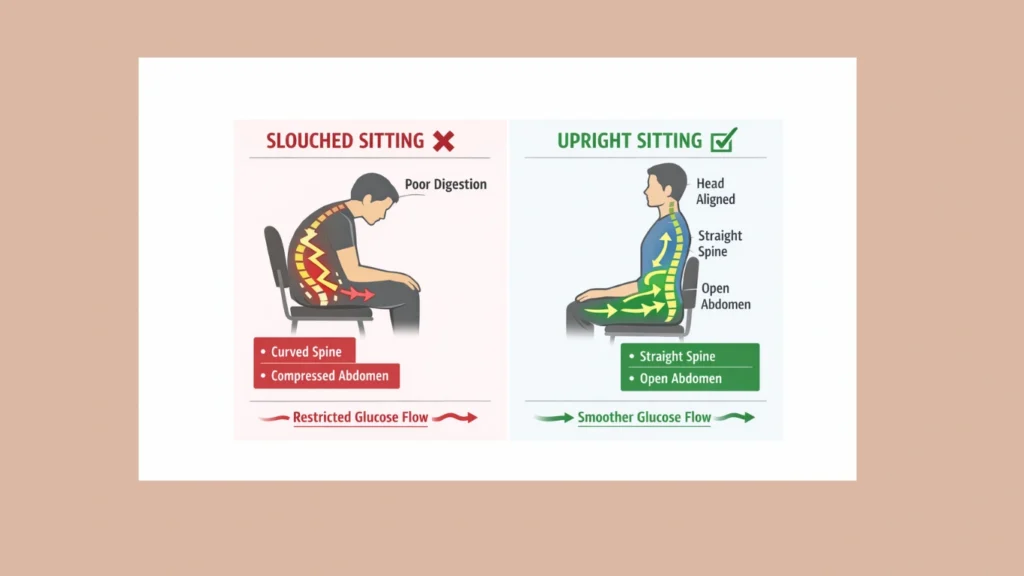
When you sit in a slouched position after eating, your spine curves forward and your abdomen gets compressed. This pressure slows digestion and affects how glucose is absorbed into the bloodstream. Based on my research, this can cause sugar to remain elevated for a longer time.
On the other hand, sitting upright keeps the digestive organs in a natural position. Blood circulation improves, digestion becomes smoother, and glucose enters the bloodstream more gradually. From my experience, this explanation made complete sense because posture directly affects internal movement, not just appearance.
Best Sitting Posture for Blood Sugar Control (Doctor-Approved Basics)
After going through multiple studies and health resources, I realized that the best sitting posture for blood sugar is actually very simple. It doesn’t require special chairs or equipment. It’s about alignment and awareness.
Doctors and posture experts consistently emphasize sitting upright because it supports digestion and reduces pressure on the abdomen. Based on my experience, this posture is easy to maintain once you consciously practice it for a few days.
Ideal Upright Sitting Position Explained Step-by-Step
Here’s how I personally corrected my sitting posture after researching it:
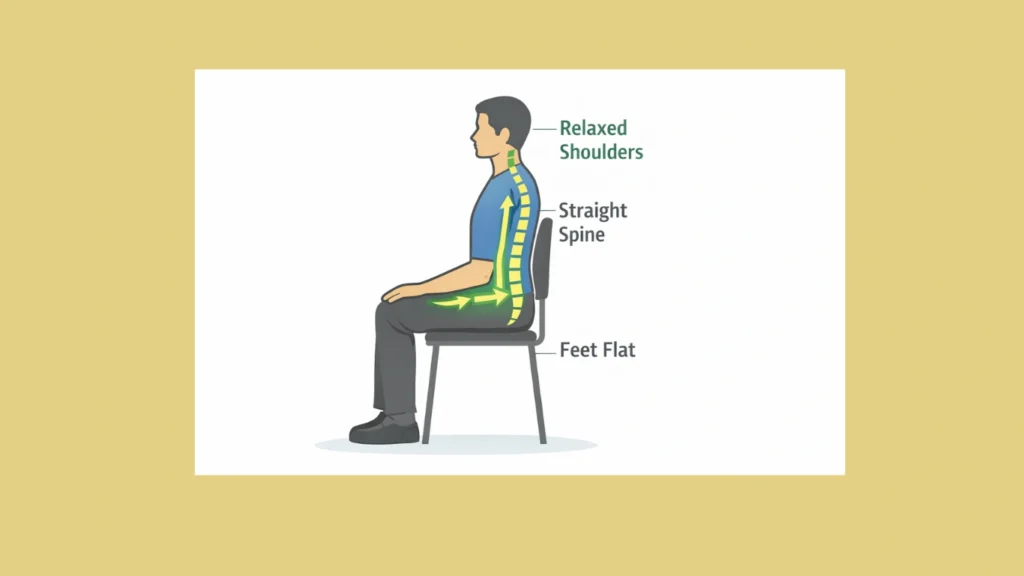
First, I made sure my feet were flat on the floor. This creates balance and prevents leaning forward unconsciously. Next, I focused on keeping my spine straight — not stiff, just naturally upright. I relaxed my shoulders instead of hunching them forward, which surprisingly made sitting feel less tiring.
What I realized over time was that this posture felt uncomfortable only in the beginning. Once my body adjusted, it became natural. And most importantly, it supported better digestion after meals.
Sitting Positions for Diabetes Patients (What Works & What Doesn’t)
Based on my research, not all sitting positions are equal when it comes to blood sugar management. Some positions support digestion, while others silently work against it.
When talking about sitting positions for diabetes patients, upright sitting consistently stands out as the most supportive option. It keeps the body active even while resting and prevents sluggish digestion.
Correct Sitting Position for Diabetics After Eating
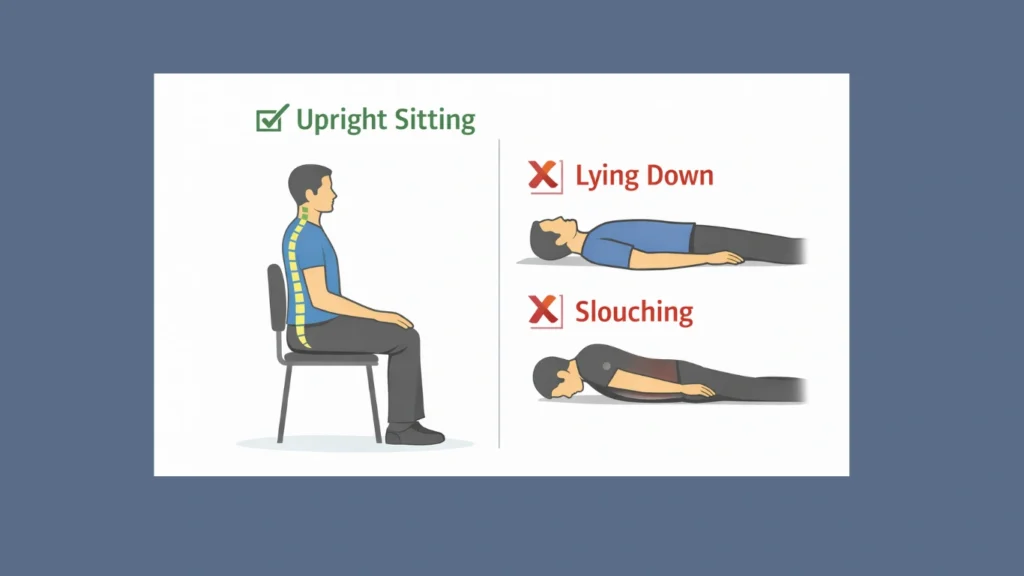
Post-meal sitting is extremely important. Earlier, I used to lie down or recline after meals because it felt relaxing. But when I researched post-meal habits, I learned that lying down can slow digestion and worsen glucose spikes.
Sitting upright after meals keeps the digestive system active and supports better glucose control. Based on my experience, even sitting calmly on a chair for 20–30 minutes after eating makes a noticeable difference in how the body feels.
Sitting Habits to Lower Blood Sugar Naturally
When I studied lifestyle-based blood sugar strategies, I learned that posture alone isn’t enough. Habits matter. Simple sitting habits to lower blood sugar can support long-term glucose stability.
These habits don’t replace medical care, but they strengthen the body’s natural systems. Based on my experience, consistency is more important than perfection.
Small Sitting Changes That Prevent Blood Sugar Spikes
One thing I personally adopted was avoiding long, uninterrupted sitting. Standing up every 30 minutes improved circulation and energy levels. I also stopped lying down immediately after meals and chose upright sitting instead.
Another habit that helped was being mindful of posture during screen time. Phones and laptops naturally push us into slouching, which affects digestion unknowingly.
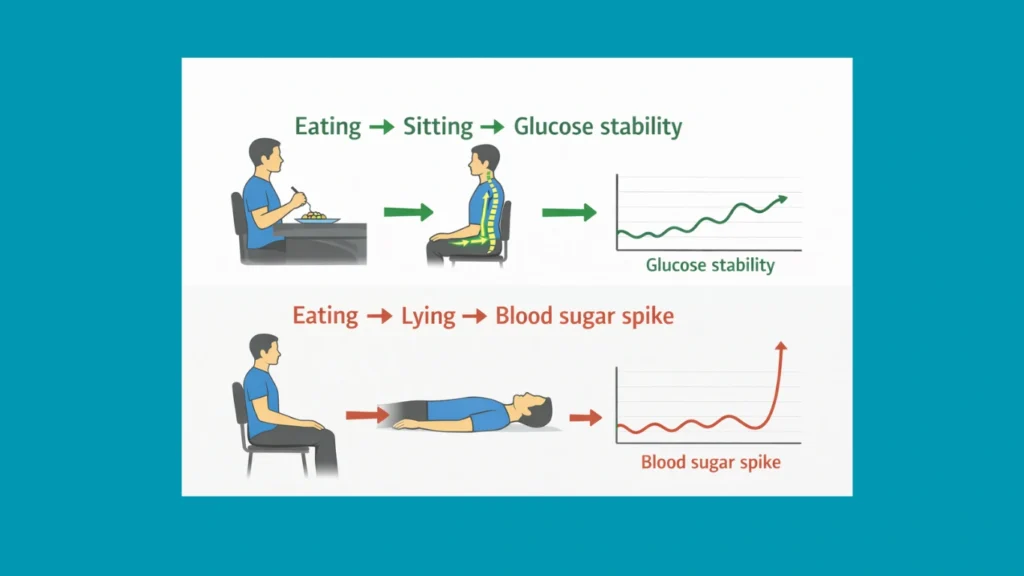
Sitting vs Lying Down After Meals (Blood Sugar Impact)
This comparison deserves special attention. When I researched post-meal behaviors, I found that sitting and lying down affect digestion very differently.
Sitting keeps the digestive system engaged, while lying down slows everything. Based on research, lying down after eating can delay glucose processing and increase sugar spikes.
Why Sitting Upright Is Better Than Lying for Glucose Control
From both experience and research, upright sitting allows gravity to support digestion. Food moves naturally through the digestive tract, and glucose absorption becomes smoother.
Lying down, on the other hand, can cause food stagnation and delayed glucose release. This explains why many people feel heavier and more sluggish when they lie down after meals.
Common Sitting Mistakes That Increase Blood Sugar
While researching this topic, I realized that many posture mistakes are unconscious. We don’t notice them because they feel normal.
Slouching, crossing legs tightly, leaning forward for long periods, and sitting continuously without breaks are common habits that affect digestion and circulation.
Posture Errors Diabetics Should Avoid Daily
Based on my experience, the biggest mistake is ignoring posture altogether. Assuming sitting doesn’t matter is itself a problem. Another mistake is lying down immediately after meals, especially dinner.
Correcting these errors doesn’t require effort — just awareness and consistency.
FAQs: Best Sitting Posture for Blood Sugar Control
1. Can sitting position affect blood sugar levels?
Yes, sitting position can affect blood sugar levels, especially after meals. From research-based observations, posture influences how efficiently your body digests food and circulates glucose. When you sit in a slouched or compressed position, digestion may slow down, which can lead to uneven glucose release into the bloodstream. On the other hand, the best sitting posture for blood sugar supports smoother digestion and more stable post-meal sugar levels.
2. Does posture impact blood sugar after meals?
Yes, posture does impact blood sugar after meals. Studies related to digestion and metabolism suggest that how sitting posture affects blood sugar is connected to blood flow and gut movement. Sitting upright allows gravity and circulation to work naturally, helping glucose move steadily into cells. Slouching or bending forward can interfere with this process, sometimes causing sharper blood sugar spikes.
3. What is the best way to sit after eating for diabetics?
The best way to sit after eating for diabetics is upright on a chair with feet flat on the floor, spine straight, and shoulders relaxed. This is considered the correct sitting position for diabetics because it supports digestion without putting pressure on the abdomen. This posture is widely recommended as one of the safest sitting positions for diabetes patients, especially during the first 20–30 minutes after meals.
4. Is sitting better than lying down after meals for blood sugar control?
Yes, sitting is generally better than lying down after meals for blood sugar control. Research-backed lifestyle guidance shows that sitting vs lying after meals blood sugar response differs significantly. Lying down immediately after eating may slow digestion and glucose utilization, leading to higher spikes. Sitting upright helps maintain glucose stability and is a simple posture to control blood sugar naturally.
5. How long should diabetics sit after eating?
Most experts suggest that diabetics should sit upright for at least 20 to 30 minutes after eating. This duration allows digestion to begin properly and helps prevent sudden glucose spikes. Making this a daily routine is one of the most effective sitting habits to lower blood sugar without medication or extra effort.
Read Also: Best After-Meal Habits for Stable Blood Sugar
Disclaimer:
This article is for educational and informational purposes only and is based on general research and experience. It is not a substitute for professional medical advice. Always consult your healthcare provider for personal guidance. For more information on managing blood sugar and post-meal activity, you can refer to resources provided by the American Diabetes Association (ADA)
1 thought on “Best Sitting Position to Control Blood Sugar (Simple Posture Guide for Diabetics)”